Affiliate Fraud: How It Works and How to Detect It
Affiliate fraud pays partners for conversions they never caused. Learn how the six main tactics work, and how to detect them.
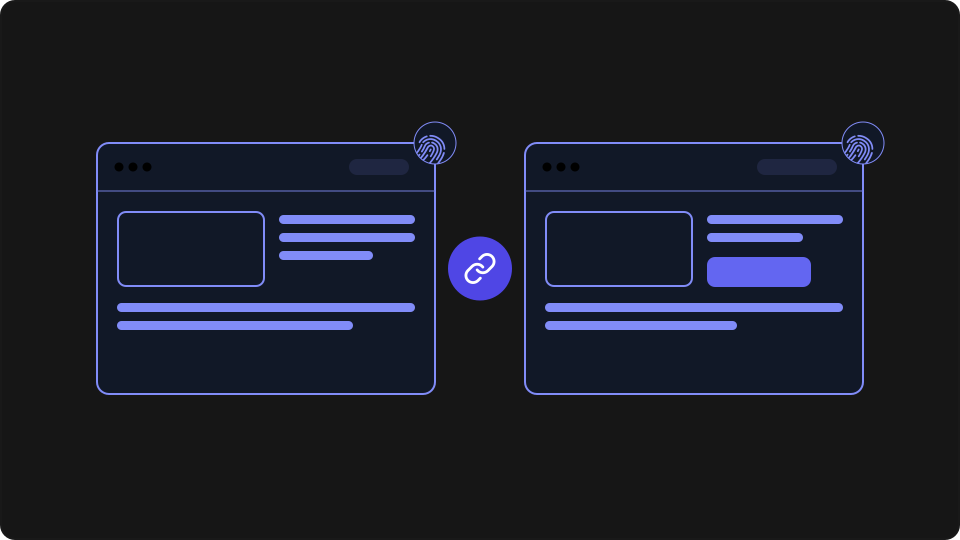
Affiliate fraud rarely looks like fraud on a payout report. It looks like a partner having an unusually good month. Every line on that report is a partner asserting that they caused a sale, and you pay commission against the assertion because you have no independent way to check it.
That is the real problem. The tactics that make up affiliate marketing fraud are usually presented as a list of six separate threats, each with its own countermeasure. They are one threat: the record that connects a partner's click to your conversion can be forged by the party who gets paid for it. Programs that fight the tactics one at a time, without fixing that record, keep paying for conversions they didn't get.
What Is Affiliate Fraud?
Affiliate fraud is any scheme that extracts commission from a partner program without producing the customer action the commission is meant to pay for. It covers conversions that were fabricated outright, such as fake leads and bot clicks, and real sales whose credit was stolen from another channel, such as cookie stuffing and URL hijacking.
That second half is why the definition matters. A fabricated lead is obviously fraud. A real customer who was going to buy anyway, credited to a partner who inserted themselves seconds before checkout, looks exactly like a successful referral. Both cost you the same commission for the same absence of work.
The amount at stake is growing. eMarketer forecasts US affiliate marketing spend of roughly $14 billion in 2026, up about 11% on the year before, which is faster than ecommerce as a whole. Estimates of how much of that traffic is invalid come mainly from detection vendors and vary widely. Lunio, for example, puts it at 24% of all affiliate traffic without publishing its methodology. Treat any single figure as directional. Your own payout data is the number that matters.
Why Affiliate Fraud Is Really an Attribution Problem
Every affiliate program runs on a join: this click, from this partner, led to that conversion. How that join is made explains why fraud in the channel is so persistent.
The claim comes from the party being paid
In most programs, the partner's tracking link sends the visitor through a redirect that writes an identifier, usually a cookie, into their browser. When the visitor later converts, your tracking reads that identifier and credits the partner. Nothing in that sequence proves the partner caused the visit. It proves only that the partner's identifier was present in the browser when the sale happened.
That identifier is something the partner can cause to be written. A hidden pixel, a pop-under, a browser extension, or a typosquatted domain can all place it without the visitor ever choosing to click anything. The attribution record is, in effect, a claim the affiliate files on their own behalf.
The join breaks at the domain boundary
The partner's content site and your checkout are different domains. Cookies do not cross that boundary, which is why the handoff depends on a redirect that the affiliate controls. It is also why you cannot see what happened on the partner's side: whether the visitor read a review, clicked a coupon banner, or never saw the partner's page at all.
So the attack surface is not the partner. It is the join key. A partner with a forged join key looks, in your data, exactly like a partner with a good audience.
Why vetting and audits keep leaking
The two controls every program uses are partner vetting before admission and payout audits after the fact. Both are useful, and both are downstream of the problem. Vetting judges the partner, not the click. Audits examine conversions that were already credited, using the same attribution record that was forged.
This is why programs that do both still leak. Until the join between click and conversion can be checked against something the partner cannot write, every other control is working from the fraudster's own paperwork.
The Main Types of Affiliate Marketing Fraud
The tactics below appear on almost every list of affiliate fraud types. Read through the attribution lens, they sort into two groups: attacks on the click end of the join, and attacks on the conversion end.
Cookie stuffing writes the partner's identifier into a visitor's browser without a real click, usually through a hidden iframe, image, or redirect loaded on an unrelated page. If that visitor later buys from you, the partner is credited. It forges the click end of the join, and it is the most common tactic because it is cheap.
URL hijacking and typosquatting intercept a visitor who was already heading to you. A lookalike domain or a malicious extension redirects them through an affiliate link on the way to your site. The click is real; the partner's role in it is not.
Brand bidding buys paid search ads on your own brand terms, so that customers searching for you by name arrive through the partner's link. You pay commission on traffic you already owned, and often pay the search engine for it too.
Click injection and bot clicks manufacture the click end at volume. Automated click traffic inflates a partner's numbers and, combined with stuffing, lets it claim a share of organic conversions.
Fake leads and synthetic personas manufacture the conversion end. In cost-per-lead programs, a form fill is the conversion, and fabricated signups generated with stolen or invented details are paid for before anyone discovers they will never become customers.
Sub-affiliate laundering hides dirty traffic behind a clean partner. The partner you vetted passes along traffic from sub-affiliates you have never seen, and the source is obscured by the time it reaches your reports.
Each item on that list answers the same question differently: which end of the join is being forged. That is more useful than the list itself, because it tells you where to look. It also separates affiliate fraud from fraud at the transaction itself, where the payment rather than the attribution is false.
Incentivized Traffic: The Part That Isn't Technically Fraud
There is a category that passes every fraud check you have: the partner really did send the click, the customer really did convert, and nothing in your terms was broken. The customer was paid, rewarded with points, or gamified into the action, and had no intent behind it.
This is incentivized traffic. Cashback sites, reward apps, and offer walls are legitimate business models, and some programs accept them deliberately. The problem comes when incentivized traffic arrives without disclosure, or in a program priced on the assumption that each conversion represents a genuine customer.
Why it costs more than fraud
Operationally, incentivized traffic is worse than outright fraud because nothing flags it. Every signal at the moment of conversion looks healthy. A real person, on a real browser, completed a real action.
The cost shows up later, in behaviour. Customers acquired this way tend not to make a second purchase, cancel as soon as the incentive has been collected, or never use the account they created. By the time a cohort analysis reveals that a partner's customers are worth a fraction of everyone else's, the commission has been paid for months.
What to look for
The signals are statistical rather than per-event:
Conversion rates that don't survive to a second event. A partner whose conversions look strong but whose customers never return, renew, or activate.
Concentration on a single partner ID. A sudden spike in volume from one partner, disproportionate to their audience.
No browsing before conversion. Sessions that land directly on the conversion step, complete it, and leave, with no product views or comparison.
Where the incentive exploitation crosses into abuse, such as stacking codes or cycling referral bonuses, it becomes a different problem, covered in our article on promo code abuse.
How Affiliate Fraud Detection Works
Good affiliate fraud detection moves from asking whether a partner is trustworthy to checking whether each claim can be verified. That means looking at signals the partner does not control.
The signal layers below are the ones that matter, roughly in order of how much they depend on your own data:
Traffic scored per partner ID, not in aggregate. Program-wide averages hide a single bad partner. Conversion rate, click-to-conversion time, and downstream quality need to be compared partner by partner.
Timing anomalies. Click-to-conversion gaps that are implausibly short, or suspiciously uniform across hundreds of conversions, suggest the click was inserted rather than earned.
Network signals. Traffic from datacenter IP ranges, or VPN traffic concentrated under one partner's tag, indicates automation or disguised origin.
A browser identifier the partner cannot write. This is the layer that addresses the join key directly.
Joining on the browser instead of the partner's cookie
A browser fingerprint is an identifier derived from the characteristics of the browser itself, such as its rendering behaviour, configuration, and network details, rather than from a value stored in it. Nobody can write one into a visitor's browser from a hidden iframe.
Record that identifier when a visitor lands on your site and again when they convert, and you have a history for each browser that is independent of any affiliate's cookie. That history answers the questions the attribution record cannot:
Was this browser already browsing your site before the partner's click appeared? A click that turns up seconds before checkout, in a session that began organically, is the signature of stuffing or hijacking.
Is one browser generating conversions credited to several partners?
Is one partner's volume concentrated on a small number of browser environments?
If you operate on both sides of the handoff, as affiliate platforms and multi-domain merchants do, the same identifier can be generated on each domain and matched across domains server-side. The attribution join then no longer depends on a cookie written by a redirect the affiliate controls.
ThumbmarkJS is one example of a browser identification signal built for this. It generates a stable identifier for the same browser across visits and domains, and it is used on 60,000+ websites, with attribution platforms among its largest users. The open-source library gives around 80% uniqueness and is a reasonable way to measure your own mismatch rate before buying anything. The API raises uniqueness to around 99% on every tier, including the free one, and adds datacenter and VPN flags. Either way, it is a signal that feeds your decision. What happens to a flagged conversion is yours to define.
Building an Affiliate Fraud Prevention Program
An affiliate fraud prevention program is most useful when it is organised around the lifecycle of a conversion, because each stage catches something the others can't.
At recruitment. Vet partners, require them to disclose traffic sources and placements, and stage payouts for new partners so that early commissions are held longer. This catches the obvious bad actors and creates a contractual basis for everything that follows.
At the click. Validate referrers, monitor for bidding on your brand terms and for typosquatted domains, and score traffic per partner ID. This catches manufactured and intercepted clicks while they are still cheap to reject.
At the conversion. Verify the join independently of the affiliate's cookie, and check velocity per browser identifier. This is the only stage that can tell a real referral from a stolen one.
At payout. Use hold periods long enough to see refunds and cancellations, and review each partner's cohort quality against downstream retention rather than conversion counts alone. This is where incentivized traffic becomes visible.
Most published advice concentrates on stages one and four. They are also the two stages furthest from the event in dispute. The click and the conversion are where the attribution record is created, and they are where affiliate program fraud is cheapest to catch.
What Browser-Based Detection Doesn't Catch
A browser identifier closes a specific gap. It is worth being clear about which gaps it doesn't close.
It identifies a browser environment, not a person and not a device. It does not follow a visitor from Chrome to Firefox, from a laptop to a phone, or into a native app. An affiliate journey that starts on a phone and converts on a desktop cannot be joined by a fingerprint; that needs the customer to log in.
IP address is part of the default fingerprint. A fraudster who resets their browser and switches proxy at the same time produces a new identifier, so the signal raises the cost of evasion rather than preventing it.
A mismatch identifies a conversion worth reviewing, not a confirmed fraud. Whether to hold, reverse, or pay the commission is a decision for your program team.
And it does nothing about a partner whose traffic is real but worthless. Incentivized traffic comes from genuine browsers doing genuine things, and finding it is a cohort-analysis job.
The honest claim is narrower than "unforgeable attribution". A browser-level signal makes forging attribution at scale more expensive and more visible, and that is usually enough to change the economics for the partners doing it.
Where This Leaves You
Affiliate fraud is six tactics attacking one weakness: an attribution record written by the party who gets paid. Programs that audit partners without fixing the join keep paying for conversions they didn't get.
Getting started is a small project. The engineer who owns your landing-page template adds one client-side script to your landing pages and conversion pages and records an identifier against each partner click and each conversion, roughly an afternoon of work. The first useful output is not a blocking rule but a retrospective query: how many conversions credited to partners came from browsers that were already on your site before the partner's click appeared? That number is usually what gets the program funded. Enforcement rules come afterwards, once you have seen your own baseline.
See how other teams use browser identification, or review the pricing tiers to size the API against your click and conversion volume.
Frequently Asked Questions
What is the most common type of affiliate fraud?
Cookie stuffing. It appears on almost every list because it is the cheapest attack on the weakest link: it writes a partner's tracking identifier into a visitor's browser without a genuine click, then collects commission if that visitor later buys through any channel.
How do you detect affiliate fraud without accusing legitimate partners?
Score traffic per partner ID and look at the quality of each partner's customers over time rather than at single conversions. One odd conversion proves nothing; a consistent pattern across hundreds does. Treat early findings as evidence to discuss with the partner, not as grounds for immediate termination.
Can affiliate fraud be detected without cookies?
Yes. A browser-level identifier, generated when a visitor lands and again when they convert and matched server-side, gives you a record of each browser's activity that no affiliate can write. Consent and disclosure obligations still apply and vary by jurisdiction, so confirm your approach with privacy counsel.
Is incentivized traffic considered affiliate fraud?
Usually not contractually, which is exactly why it survives fraud checks. The partner sent a real visitor who completed a real action. It costs you the same commission, though, and the customers it brings rarely come back. Disclosure requirements in your terms are the practical fix.