Promo Code Abuse: How to Stop Users from Gaming Your Promotions
Promo code abuse erodes margins and corrupts acquisition data. Learn how multi-accounting works and how browser fingerprinting stops it.
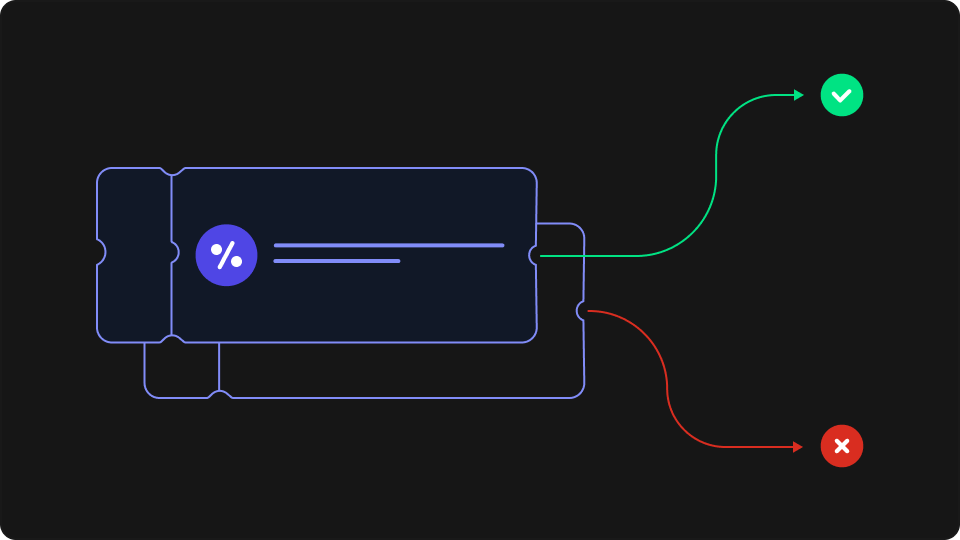
Every promo code campaign carries a hidden cost: the share of redemptions that come from returning customers posing as new ones. Promo code abuse — exploiting discount offers beyond what the promotion allows — erodes margins, distorts acquisition metrics, and delivers your best deals to exactly the wrong people. This guide covers how abusers operate, why standard defences keep failing, and the detection layer that actually closes the gap.
What Is Promo Code Abuse?
Promo code abuse happens when someone redeems a promotional offer — a sign-up discount, a referral bonus, a one-time coupon — more times than the promotion allows. Coupon abuse ranges from opportunistic (a customer sharing a code publicly) to systematic (a fraud ring claiming the same bonus across hundreds of fake accounts).
The core issue isn't the coupon itself. Most promotions assume identity can be verified through something the user controls — an email address or a browser cookie — and both can be reset in under a minute. That's the gap abusers are exploiting.
How Fraudsters Game Your Promotions
The most common attack is multi-accounting: creating new accounts under fresh email addresses to claim first-time offers repeatedly. Combined with incognito browsing or a quick cookie clear, the same browser can appear as a brand-new visitor on each attempt. From your system's perspective, it looks like 10 different customers; in reality it's one person with 10 email addresses. The same mechanism drives loyalty program fraud, where the farmed accounts accrue a points balance for months instead of claiming a single discount.
Referral fraud works the same way. Self-referrals — where one person creates both the referring and referred account — only require a second email address to execute. At scale, fraud rings coordinate groups of fake accounts to trade referral codes back and forth, generating payouts that no legitimate referral ever earned.
Promotion abuse can also involve synthetic identities: plausible-looking profile data — names, email formats, phone numbers — generated to pass basic signup validation without belonging to a real person. These accounts are harder to spot at registration because the data isn't obviously fake, just fabricated. The same multi-account infrastructure that drives promo abuse also underpins account takeover fraud — the two problems share a root cause and often the same solution.
Coupon stacking is a lower-tech variant: combining discount codes in ways the promotion terms don't intend, or applying codes during checkout flows that weren't designed to reject ineligible combinations. This tends to be more opportunistic than systematic, but the margin impact is real.
The Business Cost of Promotion Abuse
The most visible damage is direct: discounts applied to purchases that either would have happened at full price anyway, or generate no repeat business at all. But the downstream effects compound faster than the direct loss.
Multi-accounting corrupts acquisition data. When 500 sign-ups from a promo campaign include 100 users who created 5 accounts each, your reported CAC for that campaign is meaningfully understated. Budget allocated to retargeting or onboarding "new customers" gets spent on people who never intended to convert. The marketing team sees strong top-of-funnel numbers; the retention team sees no second purchases; no one connects the two until the campaign economics are long closed.
There's also an inventory cost when organised abuse is involved. Bulk redemptions from fraud rings deplete stock faster than demand forecasts account for. Legitimate customers who miss a sold-out promotion have a poor experience that reflects on the brand. And the operations cost of investigating suspicious orders, reissuing codes, and reconciling discount attribution in reporting adds overhead that rarely gets attributed back to the fraud itself.
Why Standard Defences Fall Short
Email uniqueness is the most common control and the easiest to bypass. Disposable email services generate functional inboxes in seconds. Most major providers also support plus-addressing, where user+promo1@domain.com is treated as a different address from user@domain.com but delivers to the same inbox. Any system enforcing "one redemption per email" can be defeated by anyone who knows this.
IP address blocking surfaces the same problem in a different form. Shared office networks, mobile carrier NAT, and residential proxies mean that a single IP can represent dozens of legitimate users — or one abuser cycling through a proxy pool. Flagging by IP produces false positives that catch real customers, while doing little to stop anyone using a VPN or rotating proxies.
Cookie-based limits are the weakest control of all. They disappear with a single click in any browser settings menu, and private browsing starts every session with a clean slate. A promotion that relies on cookies to enforce one-use-per-person can be claimed an unlimited number of times without any technical knowledge — just an incognito window.
How to Detect and Prevent Promo Code Abuse
The missing layer in most promo defences is browser identity. When an abuser creates a new account and clears their cookies, their email address changes — but their browser environment doesn't. Browser fingerprinting captures a consistent set of characteristics from the visitor's browser and hardware: rendering behaviour, installed fonts, screen and GPU properties, audio stack. These signals are combined into a stable identifier that persists across sessions, cookie clears, and private browsing.
At promo redemption, you cross-reference the browser fingerprint against a record of previous redemptions. A browser that has already claimed the offer — regardless of what account it's now using — gets flagged before the redemption goes through. The same browser that burned through three "first-time buyer" discounts last month shows up identically on the fourth attempt, even with a new email address and a cleared session.
A browser fingerprinting library like ThumbmarkJS fits directly into this model. Deployed at signup or at the point of promo redemption, it generates a stable visitor identifier that feeds into your existing validation logic or fraud rules. The open-source library is a lightweight starting point for teams that want to evaluate browser-level signals without an API dependency. The ThumbmarkJS API adds server-side signals — bot detection, datacenter traffic identification, and a threat score — that catch abuse from automated tooling alongside manual multi-accounting. Used on 60,000+ websites, it generates browser identifiers without requiring a user account or session state.
Rather than blocking on fingerprint matches outright, a risk-scoring approach tends to produce better results. Clear matches against known abuser browsers can be blocked automatically. Near-matches — a fingerprint similar to a flagged browser but not identical — can trigger a secondary step like email verification or CAPTCHA before the redemption is approved. This keeps false positives low and gives legitimate edge cases a path through.
Balancing Prevention with Customer Experience
Tighten controls too aggressively and you will reject legitimate customers: people who share a device with a family member, access your site from a corporate network, or use a VPN for reasons unrelated to fraud. The goal isn't to block every conceivable abuse path — it's to make abuse costly enough that the volume drops to an acceptable level.
Start in monitoring mode. Fingerprint every promo redemption for two to four weeks without taking any automatic action. Review flagged events to understand what your actual abuse patterns look like — the volume, the method, the timing. This gives you calibrated data to set enforcement thresholds against, rather than guessing and over-blocking on day one.
The businesses that handle promo fraud well treat it like any other fraud rule: deploy, measure, adjust. Your initial threshold will be imprecise. The data you collect in the first month will let you refine it significantly, and you'll have a clearer picture of the real abuse rate than any pre-launch estimate provides.
Conclusion
Promo code abuse is a browser identity problem. Email addresses and cookies can both be reset in seconds, which is why defences built on them keep failing. Adding a fingerprinting layer at the point of redemption identifies returning browsers regardless of the account they're using — without requiring a login or any change to your promotion structure.
The integration is a single development task: a fingerprinting call at signup or redemption that returns a stable browser identifier, which your existing promo validation logic can check. Your development team can typically have it running in a day. Start in monitoring mode, review flagged redemptions for a few weeks, then set enforcement thresholds once you have real data on your abuse rate.
For more on how browser fingerprinting applies to coupon and promo abuse specifically, see our use cases overview. For broader context on how fingerprinting fits into the identity problem, the browser fingerprinting guide covers the fundamentals.