Free Trial Abuse: Stopping Repeat Trial Signups
Free trial abuse resets the trial clock with a new email. Learn the signals that catch repeat signups, and where browser fingerprinting stops working.
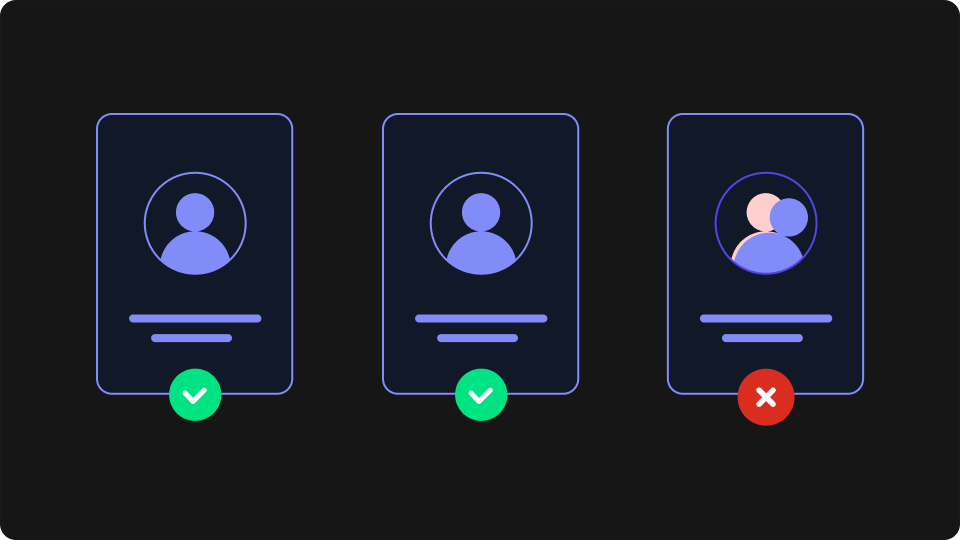
Free trial abuse shows up in your dashboard as a healthy signup rate with a conversion rate that never quite adds up, because a small number of people keep taking the trial again. It costs you three ways: infrastructure spend on users who will never pay, a trial-to-paid figure you can't trust, and support time. The usual fix, asking for a card up front, has a cost of its own in genuine signups lost, which is why so many teams are trying to defend a trial without one.
Below: what the abuse looks like at each level of effort, the signals that catch it, where browser fingerprinting helps, and where it stops working.
What Is Free Trial Abuse?
Free trial abuse is repeatedly claiming a free offer by presenting as a new user each time, so the trial entitlement resets. The person behind the accounts stays the same; only the record of their earlier trials is lost.
Trial shopping is not abuse. A genuine evaluator who takes a second trial six months later, after a new release or a change of job, is a prospect. Someone who takes thirty trials in a week is not. Volume, speed and a pattern of never converting are what separate the two, and a good policy is built around those three.
It is one motive within new account fraud. What makes it distinct is the asset being taken: repeated access to the product itself, rather than a discount (as in promo code abuse) or points.
What Free Trial Abuse Actually Costs
Most of the costs are familiar. The second one is routinely underrated.
Marginal spend: compute, storage and third-party API calls consumed by users who will never pay.
Polluted activation metrics. Every abusive trial joins the denominator of your trial-to-paid rate. You end up optimising onboarding for people who were never going to buy, and the real conversion rate of genuine evaluators stays hidden.
Support load from accounts that will never pay.
Payment fraud exposure. Where a trial requires a card, the signup form becomes a place to test stolen cards. That is a payment fraud detection problem in its own right.
For AI products the economics are sharper, because a trial that consumes GPU time or inference budget costs cash on the day it is used. In March 2023 Midjourney paused free trials of its image generator, with its CEO citing "extraordinary demand and trial abuse" and later explaining that many people were creating throwaway accounts to get free images (The Business Standard, 1 April 2023).
How Repeat Trial Signups Actually Work
Free trial abuse runs on a ladder of effort, and each rung is stopped by different controls.
Casual. A second email address, or the same one disguised. Gmail ignores dots in @gmail.com addresses, so every dotted version of an address reaches the same inbox, and it delivers mail sent to name+anything@gmail.com to the base address. Add cleared cookies or a private window and many signup flows see a new user.
Deliberate. Disposable and forwarding email domains, a VPN or a second network to change the IP address, and a fresh virtual or prepaid card for each signup where one is required. Products without a trial see the same behaviour at checkout: when the refund window is generous, the refund window becomes the trial.
Organised. Signups scripted against your API, which is where bot detection earns its place. At the top of the ladder sit anti-detect browsers: tools that run many isolated browser profiles on one machine, each with its own spoofed characteristics, storage and residential proxy, so every account looks like a different person on a different machine. Where signup requires identity checks, fabricated details are used to clear them, which overlaps with synthetic identity fraud.
Most trial abuse is done by hand, one account at a time, so bot signals alone catch only a slice of it. Running many accounts this way is a form of multi-accounting, the same behaviour seen in rewards farming.
How to Detect Free Trial Abuse on a Website
No single signal decides a case. These are the ones worth recording at signup and during the trial:
Normalised email identity: strip plus-tags and Gmail dots before checking for duplicates, and check for disposable and forwarding domains.
Network velocity: signups per network range and per network operator over a window. A single-IP rule is trivially avoided.
Signup clustering: chart new trials by hour. Bursts of similar accounts stand out quickly on a timeline that a list of accounts hides.
Card fingerprint reuse: several payment processors return a fingerprint of the card number, so the same card behind "different" accounts is visible. Watch for concentrations of prepaid and virtual cards too.
Usage shape: genuine evaluators wander through the product. Abusive trials go straight to the most expensive feature, exhaust the quota and leave.
Browser-environment correlation: the same browser environment behind accounts that have nothing else in common.
The first two are the cheapest to deploy and the first to be evaded. Email and network checks are necessary, and they stop working as soon as an abuser reaches the deliberate rung of the ladder.
Where Browser Fingerprinting Helps, and Where It Doesn't
Browser fingerprinting identifies a returning browser from its configuration (fonts, graphics rendering, screen, language and similar properties) rather than from a cookie it has stored. It is the most common recommendation for repeat signups, usually made without the conditions that decide whether it works.
What it adds
Within the same browser, a fingerprint stays the same when cookies are cleared, when a private window is opened and when a new email address is used. Those are exactly the casual and deliberate rungs of the ladder. Store the identifier against each trial record at signup and "how many trials has this browser started?" becomes a query you can run, including over trials that started before you were looking.
If your team already checks the card fingerprint, the browser fingerprint covers its gap. A card fingerprint catches one card used from many browsers. A browser fingerprint catches one browser behind many throwaway virtual cards, which is the case a card check misses entirely.
The identifier also works as a meter. Cap the free credits a single browser environment can claim, and a returning abuser gets nothing new while a genuine evaluator is untouched.
ThumbmarkJS provides this signal. It returns a browser fingerprint and a Visitor ID for each visitor, along with VPN, datacenter and bot classification, and it is used on 60,000+ websites. Whether a repeat browser is allowed, challenged or reviewed is logic in your own application.
The network caveat
Fingerprints built with server-side signals often include a network component, because it makes the identifier more distinctive. By default, small IP changes within the same network don't affect it. A change of network does: turning on a VPN, moving from home Wi-Fi to mobile data, or switching from office to home all produce a new fingerprint for the same browser. If you deploy expecting one identifier per abuser and they toggle a VPN, you get several.
There are two remedies. Exclude the network component from the fingerprint, or match on a persistent visitor identifier, which survives a network change for as long as the browser keeps its local storage. Excluding the network component makes the fingerprint less distinctive, so test the trade-off against your own traffic.
The hard limits
Browser fingerprinting has limits that no configuration removes:
Not cross-browser: switching from Chrome to Firefox on the same machine creates a new browser environment and a new identifier.
Not cross-device: a second laptop or a phone is a new environment.
Not native apps: it applies to web signups only.
Not anti-detect browsers: each profile in an anti-detect browser is a separate browser environment by design, so "many accounts, one browser" doesn't see through it.
The honest value is that fingerprinting raises the cost per identity. Each new trial now needs its own browser profile and its own network, kept consistent for the life of the account. That stops the casual and deliberate abuser and makes the organised one pay for infrastructure. It doesn't stop a determined operator.
That infrastructure is hard to keep consistent, and it is often what links organised accounts in the end. Profiles that share a proxy exit, sign up in the same few minutes or reuse a card are linked even though their fingerprints look nothing alike. This is why correlating all the signals over time catches more than any single match.
Stopping Trial Abuse Without Blocking Real Customers
Every signal above has innocent explanations. A shared browser environment can be a family computer, a shared office workstation, or a library or kiosk machine. A shared network can be an office, a campus or a co-working space. Many legitimate customers run a VPN for privacy or because their employer requires it, and security software that inspects traffic can make an ordinary visitor look unusual. A hard block on any one of these turns away people you want.
A graduated response handles the ambiguous middle better. Escalate on a combined score from several signals:
Allow the signup.
Require email verification.
Require a payment method.
Present a challenge.
Send the account to manual review.
Often the stronger fix is a product change. Limit the expensive feature instead of the clock, release value in stages, or grant credits only after a setup step that takes real time on every account. Paid trials, invite-only trials and freemium plans each change the incentive.
Requiring a card up front has costs of its own. Throwaway virtual cards get past it, and it costs genuine conversions, so a team that removed the card requirement to lift signups needs another layer in its place. Closing the free offer entirely can cost more in lost real users than the abuse did.
A perpetual free tier faces the same abuse with no clock to reset. There, the control has to be usage-based: limits on what each account, and each browser environment, can consume.
A Practical Free Trial Abuse Prevention Stack
Free trial account abuse prevention works in layers, ordered here by cost to deploy. No layer is sufficient alone, and for a small team the first three come before any fingerprinting:
Enforce the entitlement on the server. Check eligibility server-side, make sure an email alias can't trigger a second credit grant, and rate-limit the signup and redemption endpoints so a credit can't be claimed twice by parallel requests. It costs nothing and often closes the biggest leak.
Bound the loss. Put a spending cap on each expensive request, reserve credit before the work runs, and set a daily ceiling on total free-tier spend with an alert well before it is reached. This doesn't stop abuse. It limits what abuse can cost while the other layers catch up, and for AI and other metered products it comes first.
Normalise email and block disposable domains.
Limit velocity by network range and card fingerprint.
Correlate browser environments, storing the identifier from the first signup and metering free credits against it.
Monitor usage shape during the trial.
Review the ambiguous middle with a queue rather than a block.
Change the product if abuse is structural.
When you evaluate free trial abuse prevention tools, compare them on these points:
Does it give you a signal you act on, or a verdict you have to accept?
Does it work for anonymous visitors at signup, before an account exists?
How stable is the identifier across browser updates and network changes, and how distinctive is it? A home-built fingerprint is quick to start, and its weaknesses only show at volume.
What does it cost per call at your signup volume?
Can you keep the decision logic in your own code?
Conclusion
Free trial abuse is a repetition problem rather than an identity problem. The abuser doesn't need to be anonymous, only new each time, so the controls that work are the ones that remember: normalised emails, card fingerprints, network patterns and the browser environment, with spend ceilings underneath to cap the damage while they do.
If you're interested in adding browser fingerprinting once the cheaper layers are in place, adoption looks like this:
Who installs it: the engineer who owns the signup flow adds a browser fingerprint request and stores the identifier with each trial record.
First useful output: a query showing how many existing trials share a browser environment. The integration is a matter of days.
What happens next: the product or growth owner sets a review threshold and decides what a repeat triggers, from a smaller credit grant to a review.
Our use cases overview shows how other teams apply the same signal, and the free API tier lets you start recording it before choosing a plan.
Frequently asked questions
Can device fingerprinting stop free trial abuse on its own?
No. A browser fingerprint stops repeat trials from the same browser, but a change of browser or device produces a new identifier, and anti-detect browsers present a new environment for every account. Use it as one layer alongside email, network, card and usage signals.
How do you tell free trial abuse apart from a genuine second trial?
Look at volume, speed and outcome. One repeat after several months is a returning prospect; many trials from one browser environment in a short window, each exhausting its quota and never converting, is abuse.
Does requiring a credit card stop free trial abuse?
It stops casual repeats, but throwaway virtual cards get around it and it costs genuine signups. Matching on the processor's card fingerprint closes part of the gap, and a browser fingerprint catches the case where one browser uses many cards.
How should you compare free trial abuse detection tools?
Compare what they return (a signal or a verdict), whether they work on anonymous visitors at signup, how stable the identifier is across network changes, the cost per call at your volume, and whether the decision logic stays in your code.