Lead Generation Fraud: Fake Leads, Bots, and How to Spot Them
Fake leads drain CPL budgets and poison your CRM. Learn how lead generation fraud works, where it enters, and how to detect it at form submission.
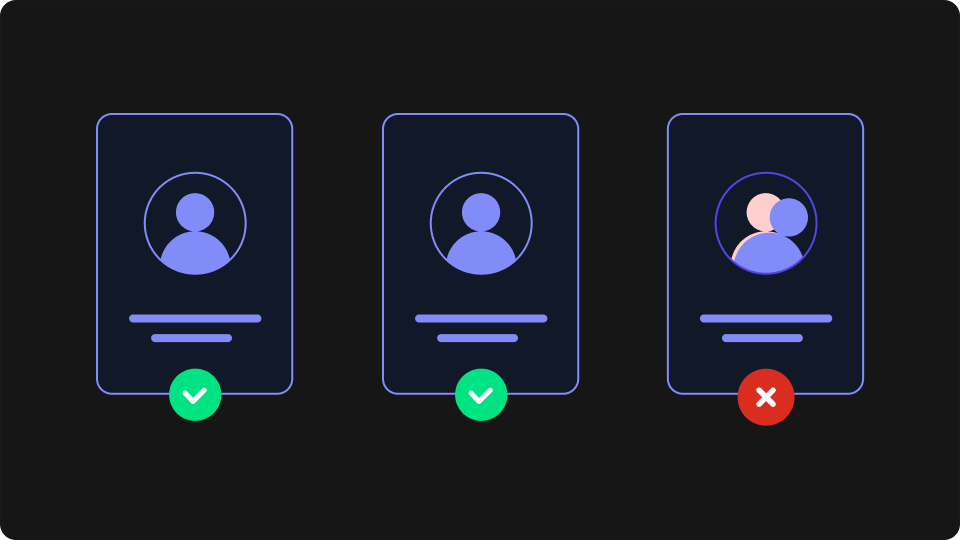
Lead generation fraud is why a healthy-looking cost per lead can still be buying nothing. The dashboard shows volume on target, and the sales team reports that a large share of the people they call never answer, or say they never asked to be contacted.
The arithmetic is unforgiving. At the $188 average cost per lead Sopro reports for B2B SaaS, 500 leads a month is a $94,000 budget, and if one lead in five is fake, $18,800 of it buys nothing. The cost continues after the spend: fake records stay in the CRM, sales reps work them, and every channel comparison built on that data is skewed toward whichever source sends the most fake leads.
Stopping it means knowing where fake leads come from, why standard validation misses the most damaging kind, and what can be observed about a submission at the moment it arrives.
What Lead Generation Fraud Is
Lead generation fraud is any lead a buyer pays for that does not represent a genuine, interested and unique person. It covers submissions made by bots, by people paid to fill in forms, by people using invented or stolen identities, and by one person submitting many times under different names.
The line between a fraudulent lead and a merely poor one is misrepresentation. A real person who fills in your form and turns out to have no budget is an unqualified lead. A lead becomes fraud when it lies about who submitted it, whether they meant it, or where it came from.
One distinction is worth keeping clear. Lead fraud manufactures a conversion that never happened. Cookie stuffing is the opposite problem: the conversion is real, and a partner steals the credit for it. The two need different defences, because one corrupts what you bought and the other corrupts who you paid.
Where Fake Leads Get In
Fake leads arrive through four main channels. Each one lets a different kind of fraud through, and each leaves you a different amount of visibility into how the lead was produced.
Web forms on your own site
Your own forms receive scripted submissions, form-filler tooling, and people repeatedly submitting by hand. This is the channel where you have the most control, since the form runs on your page and you can observe the browser that submits it. It is also where paid search and display traffic usually lands, so fake leads from PPC campaigns arrive here too.
Fake leads from Facebook ads and other in-platform lead forms
Lead forms that run inside a social platform prefill name, email and phone number from the user's profile. That removes almost all friction, which is the point, and it also means a tap can become a lead without the person reading the form. Facebook ads fake leads are often real people who did not intend to submit, plus a share of automated and incentivised accounts.
You never see a browser on your own site for these leads, because the form is hosted by the platform. Meta's "Higher intent" form type adds a review screen before submission, which trades some volume for fewer accidental leads. Sending the ad to a landing page on your own site instead moves the lead back into the channel where you can inspect it.
Publisher and CPL networks
When a publisher or lead network is paid per lead, an intermediary controls the traffic and often hosts the form. You receive a record with a name, an email and a source ID. Everything about how it was produced is hidden from you unless the contract requires the partner to send traffic to a form you host.
Purchased lists
A purchased list was never generated for you at all. The records may be recycled from other buyers, scraped, or assembled from breached data and resold as opt-ins. No submission-time check applies here, because there was no submission; the only defences are contract terms and validating the list before use.
The Five Shapes of a Fraudulent Lead
Every vendor guide to lead fraud lists the same types. They are worth knowing, but the last one on this list is the one standard defences miss.
Bot-submitted leads. Scripts fill in forms at scale, often with plausible names and real-looking contact details. These are the cheapest to produce and the most common. Opticks' ad fraud report, covering more than 2 billion clicks between January 2025 and March 2026, found lead-generation forms were 46.7% bot-filled, against 18.3% for e-commerce conversions.
Incentivised leads. A real person is paid, or rewarded, to fill in the form. The contact details are genuine and the intent is zero.
Fabricated or stolen identities. The submitter invents a person or uses someone else's real details, often taken from breach data. The email may even work; the owner of that inbox never asked to hear from you.
Misattributed leads. The lead is real, but the source credit is false, so a partner is paid for a lead it did not generate. This is where lead fraud overlaps with partner-driven affiliate fraud, and why click and lead gen fraud are usually investigated together.
The repeat submitter. One person submits many leads, changing the name, email address and phone number each time. Every record is unique on every contact field, and every record passes validation.
The repeat submitter is the one to plan around. It is cheap for the fraudster, invisible to deduplication, and indistinguishable from real volume until sales starts calling.
Why Email and Phone Validation Isn't Enough
Email and phone verification answer a narrow question. They confirm that a mailbox accepts mail and that a number connects. They cannot tell you whether the person behind the form is new, whether they are interested, or whether they are a person at all.
Deduplicating on email or phone fails by construction against the repeat submitter. Free email addresses take seconds to create, and varying the phone number by a digit is enough to pass a duplicate check. The fraudster controls every field you are checking against, so a check built only on those fields cannot catch them.
Consent certification answers a different question again. Tools in that category record that a consent statement was shown and accepted, which matters for compliance and for disputes. A certificate proves consent was captured; it does not prove the identity behind it is real or new.
None of this makes these tools useless. Validation removes typos and dead contact data, and consent records protect you legally. They solve real problems. One person posing as many is not one of them.
Catching Fraudulent Leads at the Point of Submission
At the moment a form is submitted, there is something the submitter is not typing into a field: the browser itself. Its configuration, rendering behaviour and network characteristics are observable, and together they can be turned into a browser fingerprint, an identifier for that browser environment on that device. Attaching that identifier to each submission answers the question contact fields cannot: have I seen this browser before, and how many times?
The signals that matter, in combination
No single signal settles a lead. The patterns worth flagging are combinations:
One browser, many identities. The same browser environment submits repeatedly under different names, emails and phone numbers. This is the repeat submitter, made visible.
Automated or infrastructure traffic. Submissions that come from datacenter IP ranges, or that are flagged as automated, rather than from a home or mobile connection. The general mechanism is covered in our article on bot detection.
Partner volume that collapses. A partner sends 400 leads in a week, and they come from a dozen browser environments. Real audiences do not look like that.
Missing signal. A submission that arrives with no browser identifier at all often came from a script that never ran the page's JavaScript.
Where ThumbmarkJS fits
ThumbmarkJS provides that submission-time identifier. The open-source library is MIT-licensed, runs on more than 60,000 websites, and can be added to a form page without an account. The API adds server-side signals that raise uniqueness from around 80% to around 99% in our own testing, plus bot, datacenter and VPN classification and a Visitor ID. For deduplication, that uniqueness gap matters: a lower-uniqueness identifier will sometimes group two genuine people as one.
The API can also deliver each result to your backend by webhook, so the identifier attached to a lead does not depend on what the submitting browser chose to send. That matters when the fraudster is the one filling in the form. Webhooks arrive asynchronously, which suits a review queue better than an instant block.
What it does not catch
Recognition holds for the same browser on the same device. A fraudster who rotates between real devices or separate browser installations looks like a new visitor each time, so this signal raises the cost of repeat submission rather than eliminating it.
The default fingerprint also includes a coarse network identifier, so a genuine visitor who switches from Wi-Fi to mobile data can look new. For lead deduplication, configure the network component to be ignored (the stabilize: ['vpn'] option) or match on the Visitor ID, which links fingerprints from the same browser across network changes as long as the browser's local storage survives. ThumbmarkJS also performs no behavioural analysis: no mouse tracking and no session-behaviour scoring. It supplies the identification signal; the decision is yours.
What to Do With the Signal
The signal is not the decision. How you act on it determines whether fraud detection saves money or loses real buyers.
Score and route rather than hard-block. A real buyer wrongly blocked costs more than a fake lead accepted. Use browser-level signals to lower a lead's score or route it to verification, and reserve outright rejection for the clearest cases, such as one browser submitting twenty identities.
Hold suspect leads before the CRM. A review queue keeps flagged submissions out of the system of record until someone checks them. Clean CRM data is the cheapest protection there is: it keeps reps off dead leads and keeps channel reports honest.
Aggregate by partner. Group leads by source and look at how many distinct browser environments each partner's volume comes from. A complaint to a lead network is easy to dismiss; "62% of your October leads came from nine browsers" is evidence.
Enforcement logic lives in your own stack: the form handler, the CRM workflow or the lead-routing tool. Whatever produces the identifier, the rules about what to do with it are yours to set.
Conclusion
Email and phone validation checks whether lead data is valid. Lead generation fraud is about whether the person is real and new, which is a question about identity at the moment of submission, and the contact fields cannot answer it because the fraudster writes them.
In practice, adoption looks like this:
Who installs it: a developer adds the library to the form page and sends the identifier with each submission, typically about a day's work.
Time to first signal: allow one to two weeks of baseline data before patterns are readable.
What you see first: usually a small cluster of browser environments accounting for a disproportionate share of one partner's volume.
Our pricing page covers the free API tier and paid plans, and our use cases overview shows how other teams apply the same signal.
Frequently Asked Questions
How do I stop fake leads from web forms?
Combine friction for bots with identity checks for humans. A CAPTCHA or honeypot field raises the cost of scripted submissions; contact validation removes dead data; and attaching a browser identifier to each submission catches one person submitting under many identities, which the other two miss. Route suspect leads to review instead of straight into the CRM.
How can I stop fake leads from PPC campaigns?
Send paid traffic to a form on your own site rather than an in-platform form, so you can inspect each submission. Exclude placements and sources that produce leads which never convert, and compare lead volume against the number of distinct browser environments behind it. A campaign whose leads come from a handful of browsers is buying fraud.
Can I get a refund for fraudulent leads from a lead vendor?
It depends on the contract. Many lead agreements include a return window for invalid leads, but the definition of "invalid" decides what you can claim. Negotiate that definition before you buy, and keep per-partner evidence such as submission timestamps, sources and browser-level duplication, so a dispute rests on data rather than suspicion.
Does reCAPTCHA stop lead generation fraud?
Partly. A CAPTCHA raises the cost of scripted submissions, though CAPTCHA-solving services exist to defeat them. It does nothing against incentivised leads or a person submitting repeatedly by hand, because a human passes the challenge every time. Treat it as one layer, not the defence.